
Bonus Tracks
Bonus Tracks are optional enrichment opportunities outside of orchestra rehearsal for Philharmonic, Repertory, and Symphony students. These activities provide additional performance, leadership, and learning experiences for students who would like to deepen their musical growth.
All programs take place on Saturdays after rehearsal, and have no additional fee, unless specifically indicated.
Learning Bonus Tracks
Musicianship Class
Musicianship is a topics-based enrichment class designed to deepen students’ understanding of music through listening, discussion, analysis, and practical music skills. Course topics will vary throughout the year and focus on subjects such as composers, orchestral repertoire, music history periods, sightreading, audition preparation, and pathways for continued musical growth.
Instructor: Nick Podvin
Music Theory Lab
Music Theory Lab is a self-paced, asynchronous course designed for students at a range of experience levels. This program builds and strengthens understanding of music theory fundamentals outside of rehearsal time. Students work toward mastery through topics such as scales, key signatures, intervals, chords, Roman numeral analysis, voice leading, and chord progressions.
Instructional resources are provided and students progress at their own pace. A dedicated help desk email is available for questions or to schedule individual support sessions with a staff member. There is no additional fee for Music Theory Lab; optional resources may require purchase.
Facilitator: Tony Thomann
Time & Date: Asynchronous
Performance Bonus Tracks
Chamber Ensemble
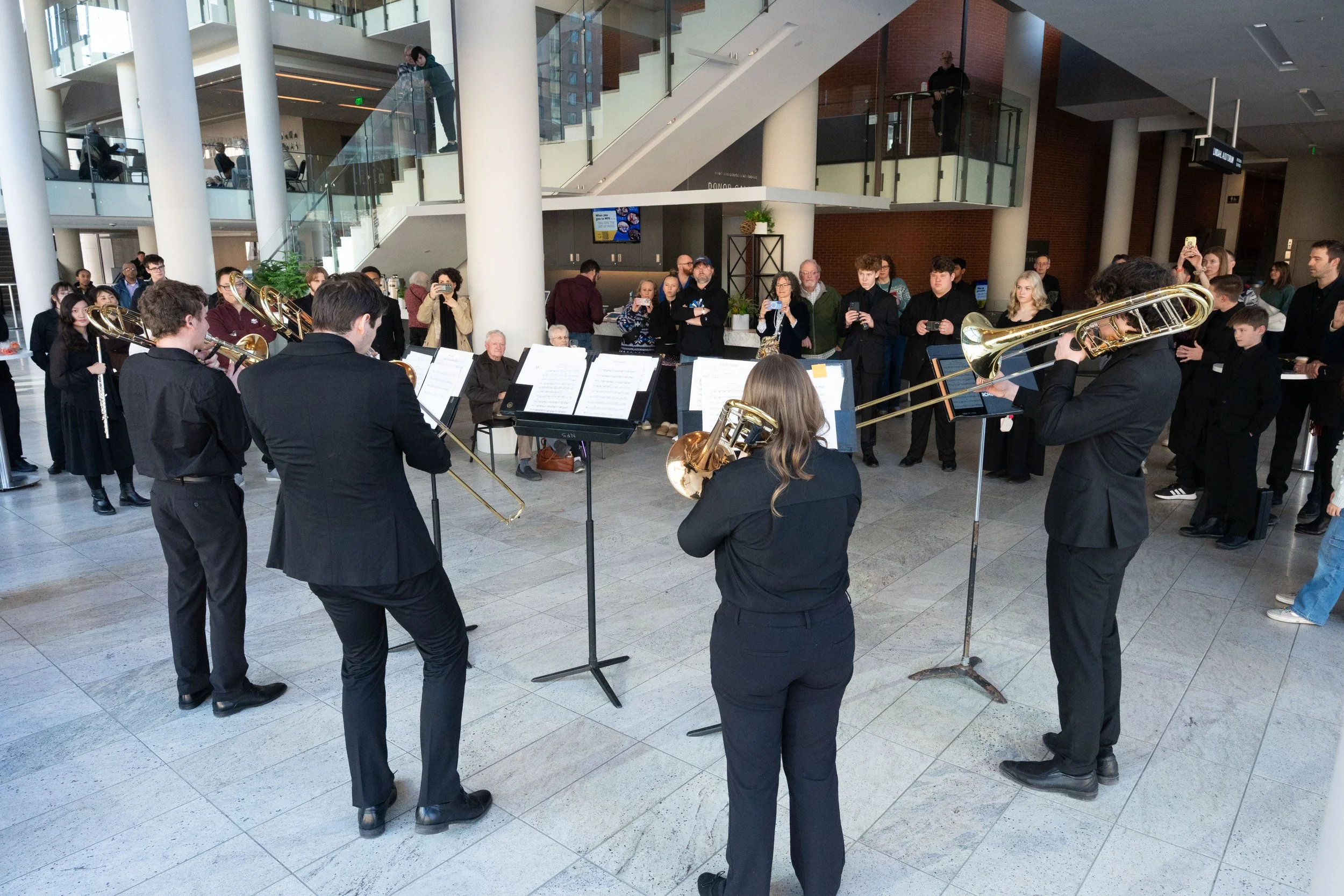
Chamber Ensembles provide woodwind and brass players with a collaborative small-group performance experience, and feature flexible instrumentation and repertoire selected to match the abilities and interests of each group. Chamber Ensembles meet weekly on Saturdays. Public performances will include a Chamber Recital on the Saturday of MYS concert weekend, in the lobby prior to MYS concerts, and a performance in the community near the end of each trimester, with additional performances depending on the availability and interests of the group. Students receive regular coaching from a professional instructor and also participate in guided student-led rehearsals. Ensemble instrumentation is dependent on the number of interested students and placement in a chamber ensemble is not guaranteed. An additional fee applies to offset the cost of sheet music and coaching (financial assistance is not offered for Chamber Ensemble).
Coaches: Rena Kraut (woodwinds); Jason Tanksley (brass)
Tuition: $216 per trimester
Secondary Instrument Dual Enrollment
Dual Enrollment is available to students who play a second instrument at a lower level than the instrument they play in MYS. No additional audition or tuition is required to enroll in Wind or String Orchestra on a secondary instrument. Students are expected to meet the same attendance and preparation expectations as all MYS ensembles, including performing in the concert. Participation is dependent on the instrumentation needs of the ensemble.
Conductors: Sophia Butler (String); Nicholas Ellison (Wind)
Leadership Bonus Tracks
Orchestra Buddies
Orchestra Buddies mentor younger musicians during the first half of weekly Wind or String Orchestra rehearsals by playing in the section during rehearsals, working with individual students, demonstrating musical concepts, and providing encouragement. This is a leadership opportunity rather than an additional performing ensemble. Orchestra Buddies generally do not perform on Wind or String Orchestra concerts unless there is a specific need.
Supervisors: Sophia Butler (String); Nicholas Ellison (Wind)
Student Leadership Council
Student Leadership Council is an opportunity that gives students a voice in shaping the MYS experience and strengthening community among the orchestras. Council members meet briefly each week, with a monthly meeting alongside the Executive Director to share ideas, discuss student feedback, and help plan initiatives that build community. Council members serve as leaders within their orchestra while developing communication and teamwork skills.
Facilitator: Tony Thomann